
Submitted by Chris Durkee, Task Force Chair –
South Shore Fire Station – Update
January 2026
Decontamination
When our firefighter/paramedics risk their lives daily to protect us, our families and our
property, we owe it to them to provide a safe and healthy environment back at the fire
station where they live. When returning from a fire, our firefighter/paramedics are
covered with any number of contaminants, some of which are carcinogenic. These
contaminants vary depending on the type of fire:
House fires: soot, smoke, ash and residue from burning plastic, electronics, asbestos,
and lead. These include fine dust that can eventually cause heart disease and cancer.
Car fires: in addition to those in house fires – petroleum-derived VOC’s from fuel and
rubber.
Electric Vehicle fires: “thermal runaway” of lithium-ion batteries creates unique toxins in
addition to non-EV fires. These include hydrogen fluoride (highly toxic and corrosive
gas) and heavy metals such as cobalt, nickel, lithium, and manganese vaporized or in
particulates.
While fighting the fire, our firefighter/paramedics are well protected by their turnouts,
masks, self-contained breathing apparatus (SCBA), and other personal protective
equipment.
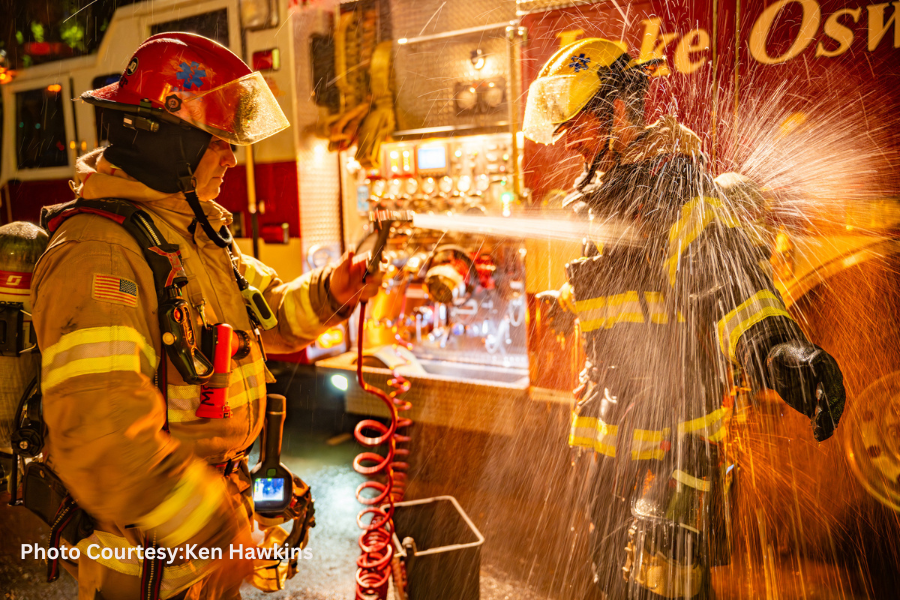
Initial decontamination occurs on site – with a good hosing down and scrubbing with a
special soap (see photo). But complete decontamination can only occur with special
equipment that is planned for the new fire station. This new equipment is specially
designed to thoroughly clean their turnouts, boots, gloves, etc. Other special equipment
cleans the various parts of the SCBA’s (complete decontamination is currently
performed by an outside subcontractor).
The fire station must be designed with this equipment in mind, and include a special air
handling system that will create a small negative pressure in the decontamination
spaces to prevent airborne contaminates from migrating into living quarters.
The new South Shore Fire Station will have proper decontamination spaces, equipment,
and pressure-differential air handling systems to provide a healthy environment for
these dedicated folks who serve us so heroically.
Lake Oswego Fire Station Rebuild PAC: A citizen-led, citizen-funded committee has
been formed to raise awareness of this vital public project and encourage a “YES” vote
in May. The committee directors are Chris Durkee, Jeff Gudman and Carrie Love, and
include residents from all over Lake Oswego. For more information, please email me:
durkeechris@yahoo.com. (Our committee’s website will be up later this month).
Stay tuned for more information in future updates!
Learn more about the South Shore Fire Station Task Force:
Website: www.lakeoswego.city/SSFSproject email: durkeechris@yahoo.com