Traffic Safety in the Palisades Neighborhood: Slowing Down to Keep Our Community Safe

Published July 3, 2026


The Palisades Neighborhood Association (PNA) recently did an analysis of traffic data collected by the City of Lake Oswego on Greentree Road. The traffic data and PNA’s analysis reinforces a simple message: our neighborhood streets are more than roadways—they are places where children walk to school, neighbors exercise, families ride bikes, and residents back out of driveways every day. Link to full analysis below.
Traffic Safety Report compiled by Rob Heape, Area 11 Rep and PNA Board Member

What the Traffic Study Found

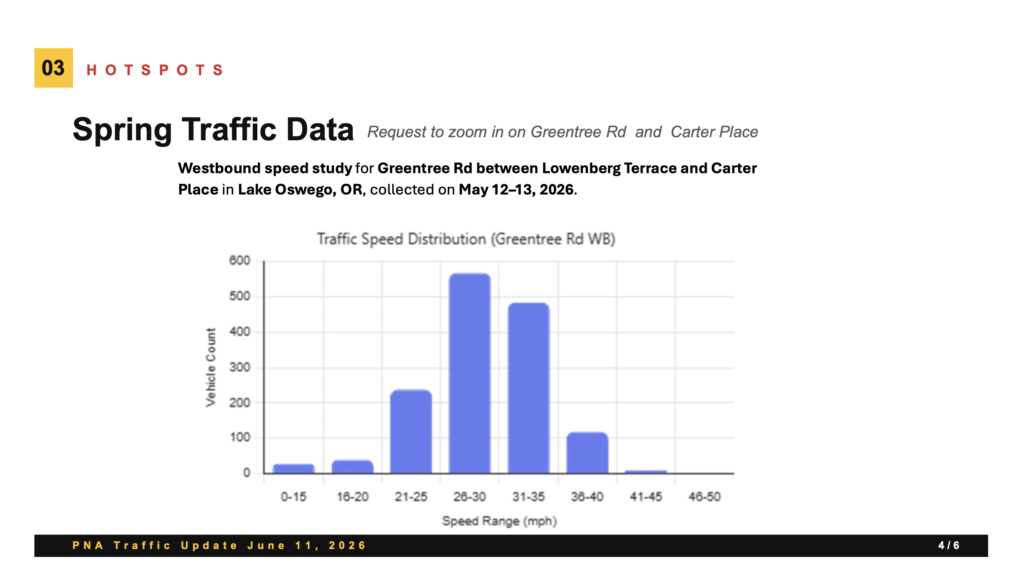
To better understand traffic patterns, the City of Lake Oswego speed study was conducted on Greentree Road between Lowenberg Terrace and Carter Place.

The Biggest Safety Concerns

The data consistently identified four issues affecting neighborhood safety:

  • Speeding on residential streets, particularly during morning and afternoon commute times.
  • Rolling stops at intersections where pedestrians frequently cross.
  • Blocked sightlines caused by parked vehicles, landscaping, and corner obstructions.
  • Distracted driving, especially drivers using cell phones.

Westbound traffic:

  • Approximately 743 vehicles per day traveled this section.
  • The average speed was 28 mph.
  • The 85th percentile speed was 34 mph, meaning 85% of drivers traveled at or below that speed.
  • Most vehicles (over 70%) traveled between 26 and 35 mph.

Eastbound traffic:

  • Approximately 724 vehicles per day used the roadway.
  • Only 4.6% of drivers traveled at or below the posted 20 mph speed limit.
  • More than 95% exceeded the speed limit.
  • The average speed was also 28 mph, with an 85% of drivers’ speed was an average of 33 mph.

The PNA’s anaylsis notes that while traffic volumes are relatively modest, the overwhelming majority of drivers are traveling faster than the posted neighborhood speed limit.

What Palisades Neighbors Can Do

The report encourages everyone to take simple steps that can make an immediate difference.

As drivers:

  • Slow down and drive 20 mph or less on neighborhood streets.
  • Come to a complete stop at stop signs.
  • Put phones away while driving.
  • Use extra caution near parks and school crossings.

As neighbors:

  • Trim hedges or landscaping that block visibility.
  • Report recurring speeding concerns to the City.
  • Walk school routes with children until they become familiar with them.
  • Support traffic-calming measures where appropriate.

The analysis concludes with an important reminder: creating safer streets is a shared responsibility. Whether you’re driving, walking, biking, or simply enjoying your front yard, small actions by each of us can help make the Palisades neighborhood a safer place for everyone.
Click for full report.

Westbound traffic near Greentree Park May 12-13, 2026 where the speed limit is 20 mph.

WANT TO GET INVOLVED?

VOLUNTEER OR DONATE

PNA Community
Generic selectors
Exact matches only
Search in title
Search in content
Post Type Selectors

Neighborhood Enhancement Program (NEP) Project Coordinator

Primary Role:

  • Handles NEP grant applications, grant approvals, reviews receipts for reimbursement and is the single point of contact between the entire Palisades Neighborhood Association (PNA) and the City.
  • To be successfull in this role you should be organized, communicative.
  • Time commitment: From 8-12 hrs. throughout the year

Process:

  • Accepting NEP proposals: Anyone living in the Palisades Neighborhood Association can submit proposal(s) to the NEP Coordinator along with estimated costs throughout the year. They should follow the application guidelines and answer the questions related to their proposal.
  • PNA Board will Vote on Which Items To Include in our NEP Proposal: During the month of March PNA board meeting the NEP Coordinator asks the board to vote on the proposed item(s). NEP Coordinator encourages person(s) proposing the item(s) to attend the meeting to answer questions that might come up. The PNA board then votes on which items should be included in the NEP grant proposal.
  • Developing and Submitting the NEP Grant Proposalt: During the NEP grant proposal period (usually the month of May) the NEP Project Coordinator:
    • Fills out the NEP grant proposal application based on items approved by the PNA Board;
    • Gets sign offs from the PNA Chair
    • Submits the proposal form to the city in early May for the initial review process
    • Provides additional information requested by the city
    • Revises and submits the final application to the City by the deadline (typically May 31).

What Happens Next:

  • Iris McCaleb from the City forwards the NEP grant proposals to the grant review committee and then to the City Council who review it and awards certain grants.The NEP Coordinator will receive a letter of award from the City and will share it with the PNA Leadership Team.
  • As items are purchased from the approved grant list, the project close-out form is filled out by the person requesting reimbursement. They will attach digital copies of receipts and photos and then submit all to both the NEP Project Coordinator and the PNA Chair. The NEP Project Coordinator submits the reimbursement request to Iris at the City for reimbursement.
  • Reimbursement checks are then sent directly to the person who purchased the item(s).