
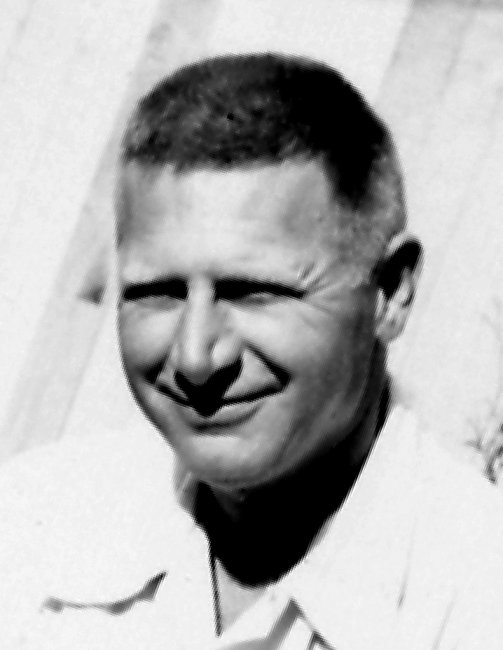
Twice during her lifetime Helen Grigg met Placido Domingo; Wally hated opera. But he enjoyed gardening; Helen detested digging in the dirt. She also disliked fishing…a lot; Wally was in the fishing business. William (Wally) Grigg started the W.W. Grigg Company in 1953 as a broker for fishing-related sporting goods: float tubes, fishing rods, reels, and float boxes. By 1970 W. W. Grigg started manufacturing its own line of products for distribution. When Wally’s son Tom joined the business in the mid-70s, the two started building their own line of custom-made fishing rods.
Wally passed away in 1989 at the age of 75 from a heart condition. Son David, the youngest, joined his brother as the regional sales manager in 1993, becoming an equal partner with Tom in 1997 as general manager. This freed up Tom to work with local and regional fishing guides to refine and further develop W. W. Grigg’s custom-made line of fishing rods.
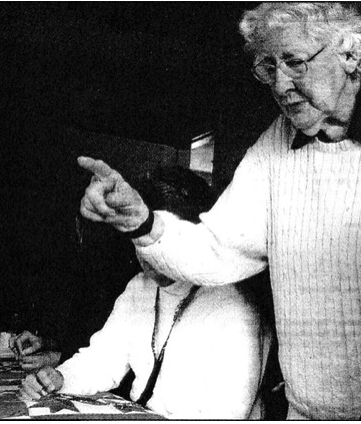
While her husband designed and built custom fishing rods under the Grigg name, Helen became active in the United Methodist Church. The church had received a donation from a parishioner of an unfinished quilt topper. Not knowing what to do with it, they sought Helen’s advice. She didn’t know a thing about quilting; but she did know the topper would be useful to someone when completed and would probably sell easily at the church bazaar.
Grigg rounded up a small group of women from the church who quilted and had quilting equipment and supplies. They set up a quilt frame and sewing table in Helen’s living room. And began quilting regularly EVERY Tuesday. The topper sold for $25. When people started asking will you quilt one for me Helen knew she was onto something.
Eventually the group divested itself from the church and became Oswego Quilters, taking on a myriad of quilting projects from people in the area. Helen became an adept quilter, quilting until her passing in 2011 at age 91. At the time of her death, Oswego Quilters had been meeting and quilting every Tuesday for 52 years, finishing approximately 300 quilts.
And they haven’t missed a stitch since; Oswego Quilters is still quilting. You can view one of Helen’s personally stitched quilts plus quilts the group has stitched at the Oswego Heritage House and Museum now through September https://www.oswegoheritage.org/Exhibits. I have seen many of these quilts; they are remarkable works… well worth a visit to the Heritage House 398 10th St.
William and Helen Grigg moved to Lake Oswego in 1953. They purchased a home on Lakeshore Road, which runs parallel to McVey Avenue to the north, overlooking the lake. The home had lakefront access but according to Helen “we never used it because the grade was so steep we couldn’t get from our deck to the water.”
JB Pilkington, proprietor of JB Pilkington Nursery and for whom Pilkington Road is named, built a summer residence on Lakeshore Road, but he never lived in it. His main dwelling stood close to his nursery on the 400 acres he owned in the Bridgeport-Durham area. Ironically, the house Wally and Helen bought on Lakeshore Road was the summer house Pilkington had built.
When she wasn’t quilting, hostessing; playing volleyball-which she did into her 70s–going to the opera or documenting Oswego’s history, Helen found time to write. She participated in the Jottings From 5th and G writing group about 2004. I joined Jottings in 2007 just as Helen decided to move on but I remember an article she wrote entitled “He’s light tan, clean, and compact”. What was she referring to? One of her sons? A piece of machinery? Definitely NOT a fishing rod. She wrote about the first car she ever bought with her own money and without the advice and consent of her husband. How she loved that piece of metal with all its little quirks. She drove her little metal bucket until the wheels nearly fell off.
Sources: History Soup – stories of Oswego’s past by Nancy Dunis
For more stories about Lake Oswego’s history, copies of my book History Soup -Stories of Oswego’s can be purchased on Amazon https://tinyurl.com/2kw55pz3 and at Lake Oswego Ace Hardware. Connect with Nancy: nancydunis.com or histsoup.press@gmail.com.

We’re thrilled to welcome Nancy as a contributor to the Palisades Neighborhood Association’s monthly newsletter, where she’ll be serving up fascinating historical stories about Lake Oswego. Get ready to dive into the rich, colorful past of our community—History Soup style! Find out more about Nancy on her website, or purchase her books available on Amazon.
Nancy Dunis is a passionate public historian, dynamic storyteller, and published author with a flair for bringing the past to life. As the founder of History Soup Press, she’s the creative force behind the History Soup book series and The HistoriConnection blog. For over 20 years, Nancy has been sharing captivating historical nonfiction through newspaper columns, blogs, magazines, social media, newsletters, and three compelling books.
With a special focus on barrier-breaking women, infamous men, and unforgettable events, she uses a wide range of audience engagement techniques to make history accessible, exciting, and relevant.