Lake Oswego’s Rassekh (ra seek) Park –off Stafford Road where the skate park
is now located–has always been a mystery to me: Who or what was it named
for? There isn’t a lot of historical information available in the annals of Lake
Oswego.
However, when I was writing my book, Festival of the Arts – the early years– I
came across the name of artist Valerie Rassekh. That bit of information told me
there was probably a connection to Rassekh Park. But who were they? What did they
do? Why might a park have been named after them? Further research led me to
conclude that most likely the park was named in honor Valerie’s father Donush
Rassekh, who made significant contributions to the cultural, commercial, and economic
climates of Oswego.
Rasssekh Legacy Similar to Ann Schukart’s: Preserve the Land
Like Ann Schukart’s South Shore Natural Area, Donush’s wanted to preserve the land
and transform it into a community space. Since it wasn’t his intention to develop the
parcel for residential or commercial use, the family resided a mile north of the park
area.
During their time in Lake Oswego, the Rassekh’s owned and operated a Persian rug
import business and were active members of the Baha’I Faith church. The business
focused on hand-knotted, authentic, Persian carpets and textiles and highly
sought after traditional, quality artwork.
Although they owned the 10 acres on Stafford Road, they did not operate a storefront
there. Instead, they managed their inventory and client operations out of various
locations they rented around town, building a loyal clientele among Lake Oswego and
Portland area residents, collectors, and interior designers.
Persian Rugs Fund Rassekh’s Dream: Better Community Education
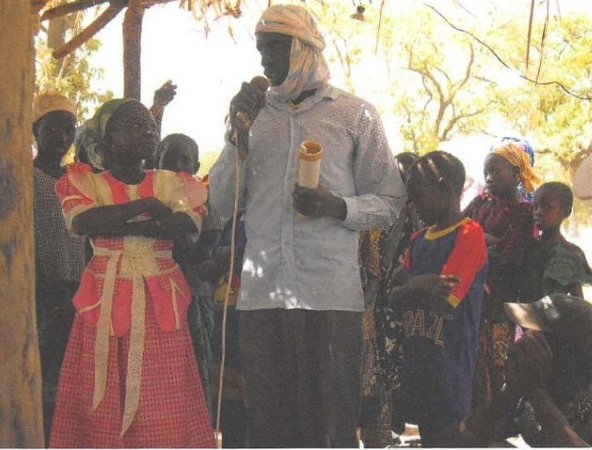
The financial success of their import business allowed Chahine and Donush to found
and fund The Bahá’í-inspired Nosrat Foundation in Mali, West Africa. The seed money
provided financial support for village schools and teacher-training initiatives across
Mali, West Africa. Although the Persian rug business, had no official business name on
record, it launched the Rassekh’s philanthropic dream: expand educational
opportunities for the underprivileged in West Arica. Nosrat is a Persian word meaning
“victory,” “triumph,” “help,” or “divine assistance.”
With the financial footing needed to start The Nosrat Foundation, the Rassekhs
transitioned out of the import rug business into international humanitarian community
Education work, eventually moving to West Africa as Bahá’í pioneers in 1980.
Donush served extensively on the National Spiritual Assemblies of Senegal and Mali.
Professionally, he worked with the United Nations, the United States Agency for
International Development (USAID), and various entities within the private sector.
Serving as co-director of the Foundation, Chahine Rassekh also worked previously for
the USAID program, having seen first-hand that most schools relied on foreign teacher
training methods. Thus, she saw an opportunity to work with eight villages where there
are strong Bahá’í communities. The goal was to establish schools that would use a
participatory approach to emphasize Bahá’í principles such as the education of girls
and the participation of women on the school boards, Bahá’í procedures for the
election of school boards.
Current documentation indicates the Rassekhs live in McLean West Virginia, close to
their children and grandchildren. Donush works as a real estate developer. No mention
of another career for Chahine.
Sources:
Oregon Genealogical Society, Ancestory.com. Baha’i Faith online annals ,
City of Lake Oswego
Sources: History Soup – stories of Oswego’s past by Nancy Dunis
For more stories about Lake Oswego’s history, copies of my book History Soup -Stories of Oswego’s can be purchased on Amazon https://tinyurl.com/2kw55pz3 and at Lake Oswego Ace Hardware. Connect with Nancy: nancydunis.com or histsoup.press@gmail.com.

We’re thrilled to welcome Nancy as a contributor to the Palisades Neighborhood Association’s monthly newsletter, where she’ll be serving up fascinating historical stories about Lake Oswego. Get ready to dive into the rich, colorful past of our community—History Soup style! Find out more about Nancy on her website, or purchase her books available on Amazon.
Nancy Dunis is a passionate public historian, dynamic storyteller, and published author with a flair for bringing the past to life. As the founder of History Soup Press, she’s the creative force behind the History Soup book series and The HistoriConnection blog. For over 20 years, Nancy has been sharing captivating historical nonfiction through newspaper columns, blogs, magazines, social media, newsletters, and three compelling books.
With a special focus on barrier-breaking women, infamous men, and unforgettable events, she uses a wide range of audience engagement techniques to make history accessible, exciting, and relevant.